
I have shown various forms of composition as shown by the above images. Composition works to draw attention to the photo; leading lines are a great example of effective composition techniques, they cause the viewers eye to follow the lines further into the photo thus creating a more interesting image. I have used this technique, photos below, to create depth. Without my use of leading lines the images would be boring and amateur looking, whereas with the lines the eye of the viewer is not immediately drawn to the main subject of the photo. The shots were taken inside with the overhead artificial lights as the only light source, because of this I should have used a higher ISO or a lower F.stop number to allow more light into the photo as my photos is underexposed. Also, my photos are slightly out of focus.
The shots depict a range of colour and tone, although I think they would have more impact as a black and white shot.


Another composition type is minimalist; this creates a ‘clean-cut’ image that has only a couple, or one, subject/s which creates a simplistic yet effective image. To demonstrate this, I have photographed a close view of the keys on a grand piano. The lack of vibrant colours and the repetitive nature of the photograph draws attention and evokes a neat, almost cold emotion to the overall effect produced by the image. The repetition of the black and white keys also exhibits the composition rule of pattern which forms shape in the image. The position of the camera when the photo was taken has caused the image to appear almost distorted and enlarged. There is a high contrast in the image between the singular black and white tones, also there is a very smooth texture in the photo which adds a sense of elegance.
The photograph was taken inside with the mid-day light coming through the overhead windows; this meant that there was a moderate amount of light so I used an ISO of 400.


Additionally, another technique is the use of angles and perspective, also known as the use of vantage points. To show this I took a range of photos from various levels on a stairwell. These photos were taken with a large amount of natural light which meant that a low ISO would have been used but everything in the shots is in focus as a high F.stop number was used. This meant that to ensure the photos weren’t underexposed a marginally higher ISO was used.


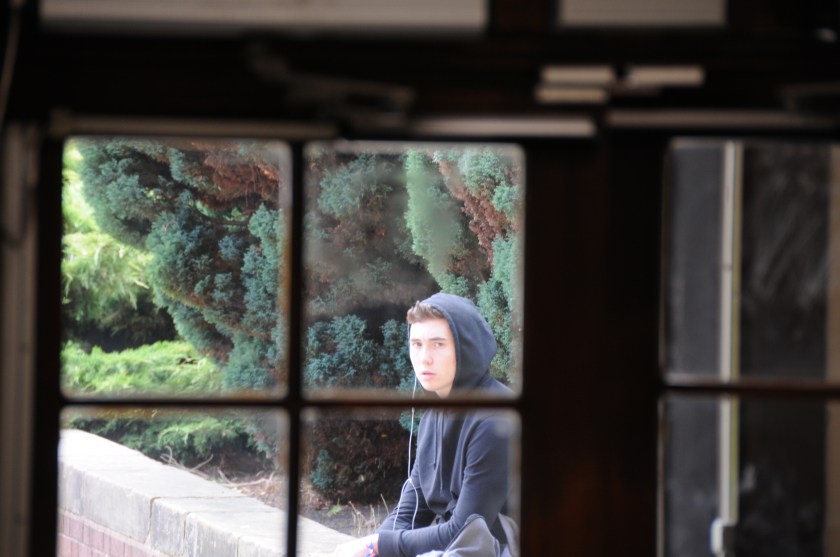
These photos, above, use framing to add interest in the image. Framing is a great way to isolate the subject/s of the shot; it creates a boarder around the subject that makes clear where to look. The framing adds shape to the photos and can add colour as well, for example the use of metal fences or vibrantly coloured tunnels as frames to attract attention to the subject. This photo singles out the subject of the photo against the background.
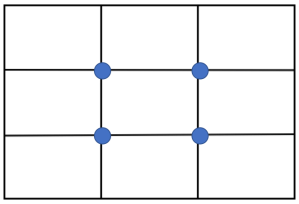
Rule of thirds is a widely used and effective technique of composing a photo. It involves specifically positioning your photo to have the subject positioned in on one of the points of interest on your photo. The points of interest could be found using a three by three grid where the points are the intersections of the lines, as shown below.


Another compositional technique used a lot is subject placement; this involves specifically moving and placing the objects within the shot instead of moving the camera. To show this I have taken the following photos:


 Nicole Wood L3 photography